Friday, 2 July 2021

Benefits of Zamak Die Casting

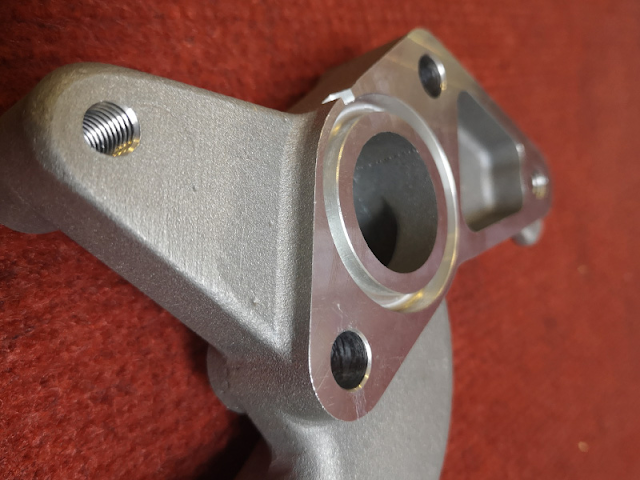
Zamak die casting is a beneficial process because it exploits the characteristics of the alloy in question, which are high in performance and unique in the sector. Zamak (Z-Zinc, A-Aluminum, MA-Magnesium, K-Copper in the German language), is an alloy that is prepared mainly of high purity zinc mixed with small percentages of aluminum, magnesium, and copper. Due to the contribution to these elements hardness and resistance to zinc are observed, which otherwise would be fragile and not very resistant.


In starting it was used for decorative applications or contour pieces. However, improvement has been seen in time and it has been able to perform more important functions. To other high-performance casting materials such as aluminum, magnesium, and brass now you can compare the mechanical properties of Zamak. So, with Zamak die-casting, you can get ribs, better finishes, and precise walls from zamak die casting supplier because it is a particularly uniform alloy, which does not need continuous processing.

With minimum tolerance limits and complex shapes can be obtained by the high fluidity and low melting point of the Zamak, which with the other alloys becomes difficult or impossible to achieve. This is the reason why Zamak is highly used and is preferred to other alloys, particularly in the components sectors, furniture, hardware, and clothing. In addition, compared to other processing techniques Zamak die-casting is less expensive, so the production costs of the pieces are low, but this is not problematic to the quality of the final products.


Zamak die casting and recycling

The benefits are not limited to quality but also related to the environment. Compared to other materials Zamak die-casting has a reduced impact on the atmosphere because the transformation of the raw material into the finished product collects less energy. From the zamak die casting manufacturers after performing the process the pollutants derived are limited because the melting cycle is faster and the temperature used is lower. Zamak is a material that provides great resistance to wear, so it lasts over time and does not need frequent replacement, with the consequent savings in terms of disposal and processing. Hence, the products become completely recyclable if the die-casting of the Zamak has been carried out correctly.


Thursday, 3 June 2021

Different Types of die casting

Al die casting is the process where under the high-pressure molten metal is forced into molds. Below is given everything that you need to know about it. Most metals used in the casting of dies are nonferrous unlike other casting processes, such as powder metallurgy.


Types of die casting

The two basic categories are Hot-chamber casting and cold-chamber casting. There are also secondary types, such as squeeze, semi-solid, and vacuum. The most common is the Hot-chamber because the same apparatus combines the liquefying and injecting procedures.

For various reasons the pieces that are created through hot-chamber casting are more susceptible to corrosion. This indicates that for metals with a low melting point, such as zinc, magnesium, and lead, hot-chamber casting is best suited. This method works best with single metals and not alloys as it has a relatively low temperature that is suited for hot-chamber casting. You will even get Al die casting supplier.

From the injection apparatus, cold-chamber casting generally removes the combustion chamber, and form the conduit for the molten metal it utilizes what is a straw. The major benefit of it is that it can even heat different metals to their melting points, even for those that are higher than that of others.

Slower operational speed is the biggest drawback of this process. It takes more time to pump the molten material. The material is even heated in a separate location so it is more expensive.


Low-pressure casting usually operates vertically. The system uses a maximum of 1 bar to push the metal upwards into the mold instead of pressing the liquid metal into a mold with a powerful piston. Correcting any imperfections that occur when the metal cools and shrinks enables the Al to die casting manufacturer to add additional molten metal to the mold. In this way, with incredible accuracy, the operator can create complex geometric shapes. Aluminum is the chief metal used with this method. However, for aluminum die-cast, this method is the most common form. The only real drawback to this method is that compared to cold-chamber die casting it's quite slower.

Original source: https://flamingfoundry.weebly.com/


Learn the Basics of Selecting materials

Effective Ways to Reduce the Cost of Die Casting Mold

Selecting materials is the basis

When a mold is manufactured by a die-casting aluminum manufacturer then the evaluation needs to be done according to the customer's casting requirements and the number of die-casting market demands. In case the number of die-casting castings is huge then to confirm the guaranteed life of the mold you can select a better material.


On the other side, if there are no special requirements of the customer then the accessories such as cylinder attachments and cylinder limiting devices save mold costs. Along with this, high-quality formwork and cylinders can be reused, and by simply changing the mold cavity and saving mold costs, die casting can be continued.

The key here is the Mold design 

According to the size of the casting the design of the mold should be calculated, and by the projected area of the die casting aluminum the tonnage of the die-casting machine should be reasonably determined, and the mold structure should be confirmed. Multiple pieces can reduce costs. According to the castings, mold design should determine the reference coordinate system, according to the direction of the mold they can rationally construct the parting surface.

Being beneficial to die casting, the first type of casting is generally placed parallel to the vertical and there is a compact design structure for the side that ultimately results in saving material, simple processing, and a small total mold volume. To the end face of the sky side, the second type of casting is not parallel.

Mold design is the key and Material selection is the basis


Today the die-casting mold market has become highly competitive and maximum manufacturers pay special attention to the manufacturing cost of die-casting molds. According to the sharing of mold manufacturers, selecting good mold materials becomes the basis for reducing the cost of, Die Casting Aluminum China molds. In reducing mold costs economical and reliable optimal design is the key. Few important means of reducing mold costs are reasonable management of processing procedures and reduction of design and processing errors.

Find the best die-casting aluminum manufacturer online.

Main source: https://flamingfoundry.wordpress.com/


Knew Everything about Die Casting

In a die-cast part, the mold determines the contours and affects its properties. This article lets you know the basic principles of how the melt can be shaped. In applying high pressure to the molten metals aluminum die casting mold, die casting, or pressure casting is a metal casting process that is characterized by the use of mold cavities.


Die Casting

The mold is generally prepared of a stronger alloy, and the process is similar to injection molding. Maximum die-casting castings are iron-free, such as magnesium, copper, aluminum, zinc, lead, tin, and lead-tin alloys and their alloys. There is a requirement of a cold chamber die casting machine or a hot chamber die casting machine but everything depends on the type of die casting one uses in the process.

The amount of casting equipment and molds is very high, so the die-casting process is only used to mass-produce a large number of products. For aluminum die casting mold manufacturers it becomes very much easy to manufacture die-cast parts, which usually require four main steps, and the single cost increment is quite low. So die casting is the most widely used in various casting processes as die casting is suitable for manufacturing a large number of small and medium-sized castings. The surface of die-casting is smoother and has higher dimensional consistency when compared with other casting technologies.

Several improved processes were born based on the traditional die-casting process, including a non-porous die-casting process that reduces casting defects and eliminates pores. For processing zinc, it is mainly used, which increases the yield of the direct injection process and can reduce waste.

The benefits of die casting include that the casting has excellent dimensional accuracy. You can find available aluminum die casting mold suppliers in your area.


The surface of its castings is smooth when compared with other casting processes, and the radius of the fillet is about 1-2.5 microns. Castings with a wall thickness of approximately 0.75 mm can be produced relative to sandbox or permanent mold casting methods. Internal structures are directly cast, such as wire heating elements, sleeves, and high-strength bearing surfaces.

For more information, please visit: https://www.flamingfoundry.com/


Thursday, 6 May 2021

Get an Overview of Gravity Die Casting

For metal and light alloy die casting, gravity die casting was one of the very earliest processes to be invented. This is a fully automated process and from a ladle, the molten metal is poured directly into a permanent or semi-permanent die.


To reduce oxidation and foaming the goal is to fill the die with minimum turbulence through one or more channels. This decreases porosity and inclusions, providing optimum metal characteristics in the final casting.

Benefits of the tilting gravity die casting process

One major benefit of the tilting gravity die casting process is that with excellent mechanical attributes like strength and stiffness it can produce dense, high-quality castings. For demanding automotive applications like brake systems and suspension components that make it very suitable.

Major benefits of Gravity die casting technologies include:

In the mold, sand cores can be placed as a result gravity die casting can also produce parts with complex shapes.

For small and medium volume production-minimum investment is required

It produces parts with excellent mechanical properties that are even used for heat treatment

It is suitable for high-volume, automated production

Application

For diverse complex aluminum casting production of automotive parts such as engine cylinder heads, brake calipers, knuckles, turbos, engine blocks, and pistons gravity die casting technology is an ideal option. It even suits many other industries too starting from lighting components to kitchen tools.

Know whether Gravity Die Casting is Cost-Effective or not

For medium and high-production products, Gravity dies casting is reasonable by cost. Due to the high initial capital cost of the die itself when a low volume of parts is required the cost per unit starts increasing.


For gravity die casting manufacturers that need a high volume of parts, it becomes the best option. It allows a broad selection of different metal alloys to select from and allows for reliable, repeatable parts that provide consistent quality as well. For manufacturers that need thin walls, strength, low weight, corrosion resistance, conductivity, and good mechanical properties Aluminum gravity die casting is one of the most popular and versatile choices. It is even a relatively affordable alloy to select from.


Everything You Need to Know About Permanent Mold Casting

In the process of permanent mold aluminum casting, into the steel die the molten metal is poured and it flows only at the force of gravity. For the maximum part, by pouring the molten metal into the top of a die that has been made in the desired shape of the casting permanent mold castings are produced. In actual casting practice, there are many deviations from this simple approach.


Sometimes at the top, the metal is poured into the mold, but into the die that conveys the molten metal to the side or bottom of the casting cavity itself a runner is cut, so that during filling the metal flow is from the bottom or side of the mold. This is performed to optimize casting conditions for the part that is being produced.

At different times by permanent mold casting aluminum manufacturer to achieve controlled filling of the mold the metal may be poured into a basin beside the die and then the entire unit is tilted. Two of the main criteria for successful casting production by the permanent mold process are the flow of metal into the die cavity and the flow of heat from the metal to the die during solidification.

From hardened steel dies for the permanent mold process are produced. Compared to ceramic molds the heat transfer rate is higher and is used in other processes and in casting cycle time this provides advantages.

You will find that in the casting that cannot be produced with conventional steel dies; the casting design requires undercuts or hollow cavities. In these cases, for the permanent mold process, the die designer may choose a loose piece or an expendable core. Semi-permanent mold casting is referred to as a process when there is the use of expendable cores.


The benefits of the permanent mold casting aluminum and semi-permanent mold casting processes are reasonable piece costs achieved from the high production rates with metal molds (especially water-cooled molds) when compared to sand and investment casting, and when compared to low-pressure and high-pressure die casting there is the lower investment required for equipment. In the semi-permanent mold, casting the use of expendable cores permits great design flexibility for castings.


Know About Aluminum Die Casting

What is Aluminum die casting?


  • Due to high-pressure systems, Aluminum Gravity Die Casting is accomplished by forcing molten metal into a mold from Corrosion resistant
  • A manufacturing process that produces defined, accurately, smooth, and textured-surfaced metal parts
  • Have strength-to-weight ratio and good stiffness
  • Based on rapid production
  • Allows a high volume of die casting parts to be produced very quickly
  • Compared to other alternative casting processes it is more cost-effective
  • Highly conductive

For complex part geometries and thin walls, aluminum gravity casting alloys are lightweight and posses high dimensional stability. It provides high thermal and electrical conductivity has good corrosion resistance and mechanical properties hence making it a good alloy for die casting. To the die casting industry's low-density, aluminum metals are essential.

Processes of Aluminum die casting 

This process implements a steel mold that in rapid succession is capable of producing tens of thousands of castings. To permit the removal of castings the die must be made in at least two sections. The casting cycle starts on two die halves being clamped together tightly. Into the die cavity, molten aluminum is injected where it solidifies quickly. In a machine, these sections are mounted securely and are arranged in a way that one is stationary while the other is moveable. The casting is ejected and the die halves are drawn apart. Depending on the complexity of the casting, die casting dies can be simple or complex, having moveable slides, cores, or other sections.

Aluminum gravity die casting manufacturer observed various reasons for aluminum being the most commonly cast non-ferrous metal in the world. For utilizing aluminum die casting, the most popular reason is that very lightweight parts can be created without sacrificing strength. Aluminum dies cast parts, as Compared to other non-ferrous materials bear higher temperatures and have more options of surface finishing. Aluminum die-cast parts have good stiffness and strength-to-weight ratio, are corrosion resistant, and highly conductive.


Characteristics and Advantages of Aluminum Die Castings:

  • Great Resistance to Corrosion
  • Fully Recyclable and Reusable in Production
  • Excellent Electrical Conductivity
  • Lightweight and Durable
  • Good Strength-to-Weight Ratio

Hire the best aluminum gravity die casting manufacturer online.


Thursday, 1 April 2021

Permanent Mold Casting of Aluminum Alloys

In the entire industry, Aluminum casting in permanent molds of steel and iron is widely used, and aluminum, as well as its alloys, make up the huge majority of permanent mold castings. In permanent molds, several methods are used for aluminum mold casting. This article mostly focuses on permanent mold casting with molten aluminum fed by low pressure, vacuum and centrifugal pressure, gravity, and squeeze casting.


Compared to sand castings, permanent-mold castings cool faster than, giving them a much finer, more uniform microstructure. Mechanical properties are boosted by up to 20%. In comparison, much stronger skin is present in pressure-die-cast parts but has weaker sections of the interior.

The process

Large numbers of dimensionally repeatable parts are produced using Permanent molds that are machined from cast iron or steel. In contrast, investment and sand-cast molds during part removal and die casting are destroyed. This also happens under extremely high pressures when molten metal is injected into dies in aluminum casting factory.

Throughout the industry Aluminum casting in steel and iron is permanent. Consequently, dies must be designed to withstand these pressures which compared to gravity-filled permanent molds drastically boost the cost.

With uniform nonporous microstructures, permanent-mold castings can be made, but on solidification rates and foundry tooling designs, these qualities are highly dependent. Molds must be designed carefully with sprue, vents, and risers.

To help ensure controlled laminar flow of the metal into the mold and adequate feed to all sections of the casting design and placement of sprue and gates are critical. The amount of gas entering the melt is minimized by the laminar flow. In castings inordinate amounts of dissolved gas in the melt produce voids.


For areas of a part that otherwise may become isolated, risers act as reservoirs of metal to supply a constant flow. Compared to thick ones thin sections freeze faster. Thus, to continually feed the cavity carefully placed risers are needed as metal contracts during cooling. Because of this phenomenon in aluminum mold casting projects, the void formed is a casting defect known as shrinkage porosity. At last riser, sprue solidifies resulting in what is denoted as directional solidification.


Know about Various Methods of Aluminium casting

Aluminum casting, for producing metal parts, is a great material, irrespective of whether you have a completely new product or the requirement to manufacture more of an existing product when it has a very high demand. It is quite inexpensive and has great thermal and electrical conductivity. However, with every casting method, the result becomes different. As they have their limitations and possibilities, there comes a need to compare different methods with each other. This way, for your production needs you can choose the most suitable casting method.

Based on your production volumes you can select the aluminum casting method


Production volume is the most important consideration in aluminum casting. Your products will be of desired quality with the right casting method that to in terms of mechanical strength, dimensional accuracy, thermal and electrical conductivity, costs of production, surface quality, and tooling, as well as delivery time.

Aluminum sand casting: Cost-efficient, small-volume production, and prototyping

For low production volumes as well as prototyping sand casting is a great method. In this method, to produce castings of all sizes with low tooling costs molten aluminum is poured into a resin-bonded sand mold. On one hand, by aluminum casting supplier this method might be the fastest method for casting but in the end, it depends on the type of product. Also, there is low dimensional accuracy in this casting method and, thus, it will not produce very complex products.

Advantages of Sand casting

  • For castings of all sizes, it is good
  • Due to low tooling costs, it is cost-efficient

Low-pressure die casting has low porosity in aluminum components and enables a high level of solidity


Low pressure dies casting is a cost-effective method, in which through a tube with low pressure the mold is filled up slowly with molten aluminum pushed upwards to the die. For your product, this enables a high level of solidity and low porosity. Now a day’s aluminum casting service is highly and everywhere provided. Also, its heat conductivity and other mechanical properties can be enhanced through the treatment of heat. For your production needs, you can choose the most suitable casting method.


How is the Casting of aluminum Alloy Accomplished?

For producing casting aluminum parts, casting is one of the major paths that are taken. In foundry alloys, good casting ability includes a short casting cycle, relatively high fluidity, and the relatively low tendency for hot cracking, good as-cast surface finish, low melting point, and chemical stability. In the case of Al-Si alloys, a treatment called eutectic modification is used to change the eutectic silicon from the coarse plate into fine fibrous morphology that is less harmful to mechanical performance. Main shape casting processes include permanent mold casting, high-pressure die casting, low-pressure die casting, and sand casting. For filling the alloy into the mold/ die and feeding the solidification shrinkage each process has its strategy.


Aluminum is one such metal that can be cast by all of the processes that are used in casting metals. In decreasing order of amount of cast aluminum, the processes involved are: die casting, investment casting, sand casting (green sand and dry sand), permanent mold casting, plaster casting, and continuous casting.

To respond to urgent demand the delivery time might be too long, depending on your product and the workload of your casting partner. Also, there is low dimensional accuracy in this casting method and, thus, it will not produce very complex products. With every casting method, the result becomes different. As they have their limitations and possibilities, there comes a need to compare different methods with each other. This way, for your production needs you can choose the most suitable casting method.

For producing a specific aluminum alloy part many factors affect the selection of a casting process. For all casting processes the most important factors are:

  • Factors related to quality.
  • Cost factors and Feasibility

Generally, Aluminum alloy dies castings are not heat-treated but sometimes are given dimensional and metallurgical stabilization treatments.


Because of entrapped gases die castings are not easily welded or heat treated. For the pressure-tight part, special techniques and care in production are needed. The selection of an alloy becomes helpful with a narrow freezing range. In some die casting foundries, for the production of parts for some special applications, the use of vacuum for cavity venting is practiced by cast aluminum manufacturer.


Follow our Facebook and Twitter for more information about our product.


Instances When Permanent Mould Casting Is Preferred

Sand casting and permanent mold casting are two different but related procedures that are each ideally suited to particular situations and r...