Tuesday, 8 February 2022

Advantages and Applications of Aluminum Die Casting Metals


Among all die-cast alloys, parts made by die casting aluminum are lightweight and able to withstand the highest operating temperatures.

Characteristics of Aluminum Alloy:

Excellent EMI and RFI shielding properties

Outstanding corrosion resistance

Very good strength and hardness

High operating temperatures

Good finishing characteristics

Good stiffness and strength-to-weight ratio

Excellent thermal conductivity

High electrical conductivity

Lightweight

Full recyclability

Significant advantages are offered to the mechanical designers because of the properties of Aluminum’s strength, corrosion resistance, and heat dissipation. And for even more applications our proprietary Thin Wall Aluminum Technology has made aluminum die casting an option.

Advantages of Aluminum Die Casting

One of the most significant benefits of die casting aluminum china is that when compared to other die cast alloys it creates lighter parts that too with more surface finishing options. Among all the die-cast alloys Aluminum can withstand the highest operating temperatures. Moreover, cast aluminum retains high dimensional stability with thin walls, is versatile, corrosion-resistant; and can be used in almost any industry.

Applications of Aluminum Die Casting: 

By contributing to weight-saving requirements Aluminum castings improve automotive fuel efficiency

In the telecom and computing industries, Aluminum is used in a broad range of networking and infrastructure equipment as RF filter boxes and housings require heat dissipation.

In handheld devices, aluminum castings provide durability with minimal weight, EMI/RFI shielding, and rigidity.


Die-cast aluminum is ideal for electronic connectors and housings because of aluminum’s excellent electrical performance and shielding properties, even in high-temperature environments.

Recycling Aluminum Die Castings

By mixing and melting pure aluminum with other materials such as magnesium, iron, and copper, the making of secondary aluminum alloys is done. Due to the cost of extraction, the use of pure aluminum in casting is quite rare. What makes aluminum alloys a top choice for designers from nearly any industry is their ease of use in die casting combined with lighter weight and durability.

Compared to primary aluminum Secondary aluminum is more economical to produce and it is because it only requires 5 percent as much energy to produce. It is even highly used by die casting aluminum manufacturers. During fabrication, most of the energy consumption in aluminum die casting is used to heat and re-melt the metal. For this reason, die casting can save more time, energy, and money by re-melting in-house.


Overview of Die Casting

Die casting is one of the most economical processes that you will come across. The benefits of this production process are that you can produce hundreds of thousands of castings relatively quickly by using just one mold. All components that are produced by aluminum die casting mold have uniform quality and it involves relatively low unit costs.


Molds

The die-casting molds, made of high-quality, heat-resistant steel grades, consist of two halves that form a cavity into which during the casting process the liquid melt is pressed. On a fixed and movable machine plate, the halves are located. To the mold halves, during the casting process, high pressure is applied, which is why the mold is equipped with latches. Along with this, certain parts of the mold are cooled and/ or heated so that the casting solidifies as desired. The production of the molds is very expensive and is quite time-consuming, but with just one of the several tens of thousands to over a million castings can be produced. One more benefit of the reusable casting molds is that the melt cools down quickly. You will find different aluminum die casting mold suppliers in the market.

Functionality and Procedures

There are two different ways of manufacturing components in die casting: hot chamber and cold chamber die casting. In both manufacturing processes, before the casting process, the mold is sprayed with a release agent so that it can make sure that the subsequently cast part can be easily removed from the mold. However, direct pouring of the melt into the mold cavity is prohibited but is first filled into the casting chamber of the die casting machine.


Fields of Application

For large series production, i.e., for many components of the same type to be cast Die casting is mainly used. High casting quality is achieved despite the high pressure used during the manufacturing process. For the production of very thin (up to 1 mm) (lightweight) components, the die casting process is particularly suitable.

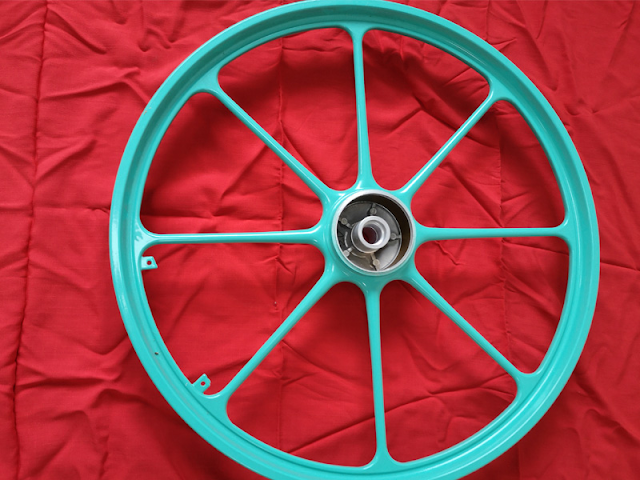
Most commonly, for the automotive industry, such as wheels, blocks, cylinder heads, valve blocks, and manifolds die-cast components are manufactured. This sector accounts for around 84 % of the castings produced. With the use of aluminum parts, aluminum die casting mold manufacturers have found a reduction in the weight of the vehicles and thus to a reduction in fuel consumption.


Right Solutions for Aluminium High Pressure Die Casting

Aluminum high pressure die casting is one of the important metal casting processes? It is characterized by forcing molten metal into a mold cavity under high pressure and it is created by using two hardened tool steel dies that have been machined into shape and for the duration of the process, they work similarly to an injection mold. Different die casting processes have their importance similar to high pressure die casting. Selecting the right type of die casting is an important decision to make. To get the right solutions is Searching for the right manufacturer is what all you have to do and then make a contact.


Depending on your choice and requirement, you can get the right solutions for high pressure die casting aluminum. It can be achieved by going online and searching for the top company that has been providing such precise solutions and services in a real-time manner. You must Go online as it will be counted as one of the convenient ways in helping you find what exactly you are looking for.

You can even get a quote from some of the reputed names online and can select one that fits well your requirement. To avoid any kind of mistake it is better to compare prices and specifications. You will have some better options to fulfill your requirement by reaching the company if you are looking for precise solutions for high-pressure die casting. A team of dedicated professionals works here, who listen to your requirement and give you the right solutions in a real-time manner. Their major motive is to help you at every step and make sure that in a real-time manner you are getting precise solutions.


From aluminum die-casting to the zinc casting process, you will get appropriate solutions in a real-time manner that to from experienced professionals who work in different companies. You must find the right one and get precise solutions.

Manufacturers and suppliers of high pressure aluminum die casting china companies to provide smooth, sharply defined, or textured-surface metal parts. Metal castings are produced by casting process from melted metal by pouring it into molds.


Wednesday, 5 January 2022

Benefits of Gravity Die Casting

Gravity die casting is basically used to fabricate metal alloys with dense, high-quality mechanical attributes. At times it is also referred to as permanent mold casting. This process includes pouring molten metal into molds with the help of a ladle and it even relies on gravity alone to fill them. The gravity method led to various benefits which include faster production times, smoother surfaces, and exceptional dimensional accuracy.


In this particular process, the molten metal is poured directly into a semi-permanent or permanent die with the help of a ladle which then can be fully automated.

Compared to other processes gravity die casting process also tends to be more cost-effective. It is because it does not need any large or complex machinery to inject the metal into the molds. Along with that, the molds themselves are reused indefinitely. It then reuses the wasted time and resources which are required to constantly produce new dies. This method then produces high-volume, quality casts that need very little finishing.

Alternatives to Gravity Die Casting

Rather than gravity dies casting aluminum die casting is often used for larger production orders. The use of sand casting is in creating three-dimensional hollows and complex molds. It usually has higher tooling costs.

Materials & Process of Gravity Die Casting

This method typically works best with non-ferrous alloys like aluminum and copper. It is performed manually but in certain circumstances, it can also be automated. This is a simple process: at first, the mold undergoes heat treatment, and then the coating is given with a lubricating die release, which then is easily removed after it has cooled. Then, into the cavity, the liquid metal is poured and allowed to flow.


Automotive Industry & Gravity Die Casting

Gravity die casting manufacturers invest in well-designed, significantly tooled permanent molds, which results in valuable consistency. Due to the long-term reusability of the molds surface details are reliably reproduced. It is formed using durable materials like stainless steel, grey cast iron, and graphite. Although for simply shaped, single-part molds gravity casting works best. It even produces more complex casts effectively. 


Attributes of Permanent Mold Casting

Permanent mold casting aluminum is similar to the process of sand casting and in this method to the pouring of molten metal is done in a metallic mold without external pressure. Molds are prepared from cast iron or steel which after every casting are not destroyed or rebuilt. The process is called Permanent mold casting as these molds last for long periods.


Usually, they are made of non-ferrous alloys, grey cast iron (having high resistance to thermal shocks), or alloy steels (for very high temperatures and withstanding surface erosion. With a refractory, the inner surfaces of the mold are coated first and then with lamp black or core oil. This is performed to reduce the chilling effect on the cast metal and to facilitate the removal of casting, and prevent the adherence of the molten metal to the mold.

In this permanent mold aluminum casting process, there is no application of external pressure but for the casting of metal in the mold hydrostatic pressure created by the risers is mainly responsible. This process is sometimes called gravity die casting as no external pressure is applied.

For hollow castings, the molds provide facilities for setting cores and ejector pins for ejecting out casting from the mold. In two halves the molds are generally made which are then hinged at one end and the other end has provision for clamping.

Because of fast conduction through the metallic mold, the heat of the molten metal is removed very rapidly. The metal shrinks very fast and then leaves an air space between the mold surface and casting.


On a sliding carriage, the two halves of the mold may be mounted where on one side one half is fixed and the other half is movable along a horizontal bed.

For hollow casting and depending upon the shape of the hollow portion required either metal cores or dry sand cores can be used. The dry sand core is used for complicated shapes having varying diameters by the permanent mold casting aluminum manufacturer. If the metallic cores are used, before the metal starts solidifying, they have to be withdrawn.


Saturday, 4 December 2021

Significance of Quality Factor in Aluminum Casting Processes

One of the few metals that by all of the processes used in casting metals can be cast is Aluminum. In decreasing order of amount of aluminum casting, these processes are: continuous casting, permanent mold casting, die casting, plaster casting, sand casting, and investment casting. Other processes such as hot isostatic, squeeze casting, and lost foam pressing are also mentioned. Several key parameters such as pouring temperature, permeability, compression strength all need to be applied and controlled accurately for the process to work in an optimum way.


Using green sand as the molding material, Green sand casting is a common sand casting process. Greensand is a sort of wet quartz sand used in a wet atmosphere and is not green in color.

Affecting the selection of a casting process, there are many factors that for producing a specific aluminum alloy part. For every process of casting, the major factors are as follows:

Quality factors

Many aluminum alloy castings, in terms of feasibility, can be produced by any of the available methods. However, design or dimensions features determine the best casting method automatically for a considerable number of castings. As sand castings, most very large cast products are made rather than as die or permanent mold castings. With metal molds, Small castings from aluminum casting suppliers usually are made to ensure dimensional accuracy.

In the selection of a casting process, Quality factors are also important. The term quality refers to both levels of mechanical properties and degree of soundness when applied to castings.


However, you must know that air tends to be trapped in the casting although cooling rates are very high in die casting, which results in appreciable porosity amounts at the center. To find ways of reducing such porosity, Extensive research has been conducted; however, eliminating is difficult if not impossible. Die castings, as compared to low-pressure or gravity-fed permanent mold castings, often are lower in strength which despite slower cooling is sounder. To large quantity production of relatively small parts, Die casting by aluminum casting service is especially suited.


Learn Which Aluminum Casting Method You can Pick

Major factors needed to decide which casting aluminum you must choose to include the following factors:

Surface finish: the smoothest surface finish out of the mold is offered by die-casting and Permanent mold casting.


Strength: in the finished product, Permanent mold casting provides the greatest material strength. In this area due to the nature of the process, the pieces produced via permanent mold casting, although similar to die casting, have an advantage.

Speed: compared to permanent mold processes, in a short amount of time sand Casting automated processes offers a high output of parts. Thanks to the pressurized injection process, die casting provides the greatest speed in manufacturing.

Short runs and Prototypes: When only a few pieces are needed, Sand casting is the method of choice thanks to its low tooling cost.

High quantities: between tooling costs and higher quantities, Sand Casting offers the most advantageous balance while a permanent mold is a closer second. However, die casting may be the better choice for quantities well above 100,000.

The three processes involved in Cast Aluminum methods

For casting aluminum, three major methods of metal casting can be used: die, sand, and permanent mold casting. Behind each of these techniques of metal casting, the methodology used is as follows:

Permanent mold casting: As the name implies, the mold is not broken away in this aluminum casting method. The cavity is filled with aluminum via gravity and a reusable metal mold is created. After cooling, the mold is then separated and the finished part removed or ejected.


Sand casting: containing a cavity into which the molten aluminum alloy from which your part will be created is poured, a mold is created from a sand mixture in this method. The sand mold is broken away from the part once the aluminum solidifies and cools.

Die casting: to permanent mold casting, Die casting used for cast aluminum parts is very similar except into the cavity under pressure, that the molten aluminum is injected rather than filled and poured via gravity. The two processes are similar apart from this functional difference.


Get to Know about the Green Sand Casting

Using quartz sand molded casting, like gray or ductile iron castings, green sand casting is a wet molding technique although not technically green in color.


Several key parameters such as pouring temperature, permeability, compression strength all need to be applied and controlled accurately for the process to work in an optimum way.

Using green sand as the molding material, Green sand casting is a common sand casting process. Greensand is a sort of wet quartz sand used in a wet atmosphere and is not green in color.

For producing some simple aluminum castings, it is also suitable. Larger air permeability is needed by steel castings. So, for making steel castings, it is not workable.

Used in mold sand technology, Green sand molded casting China is one of the popular and first methods and in metal casting foundries, it is often applied. By using green sand, this molding method is featured to create the sand mold for the casting, this is the main material.

Due to readily cheap and available raw materials, remains one of the most versatile casting processes is the green sand casting; flexibility concerning composition, size, and shape; and the possibility of recycling the molding sand. With the preparation of mold, the sand casting process starts allowing the metal to solidify, pouring molten metal into a sand mold, and then breaking away the sand mold for removing a casting product. Melting and molding processes are the most important stages out of the various steps involved in the casting process. Defective castings result from improper control at these stages.

To enhance the quality of castings by adjusting the process parameters, several foundry engineers and researchers have researched in the field of green sand-casting.


Green sand casting Benefits 

  • Less expensive
  • Across the parting line, Dimensional accuracy is good
  • In minimum time, Flasks are ready for reuse
  • As compared to compare to another type, less danger of hot fearing of casting
  • As no baking is required, less distortion occurs than in dry green sand casting supplies

Wednesday, 13 October 2021

Different Types of Alloys That are Used in Die Casting

It can be quite difficult to die cast sturdier metals such as certain variations of steel but you will see there are many other types of well-suited metals available for die casting methods.

The construction of alloy die casting molds is usually done from hardened steel and in a die casting machine, they are often the most expensive component. By these molds, various alloy families with different results are handled but on metals having low fusing temperatures, the process of die casting is most effective. The common die casting alloys are of various categories for this specific reason and as per their composition as well as properties of the material.


Alloy Die Casting: Its Types and Uses

Lead Alloys

For their corrosion resistance, Lead-based materials are used by alloy die casting supplier. Fire-safety equipment, bearings, and various decorative metal goods are the common applications that are included. For the production of castings under 15 pounds, these are quite inexpensive, but lead alloys are not used for products that need to be in contact with food. The composition of a typical lead alloy can be 90 percent lead and 10 percent antimony.

Zinc Alloys

Compared to other materials it becomes quite easy to die-cast and responds well to the die molding process of zinc-based materials. These materials consist of multiple metals in specific ratios. With slightly higher proportions of tin, the workpiece becomes more flexible while with increased copper levels, rigidity is improved.


In place of cast iron or brass, zinc dies castings are more often used by alloy die casting manufacturer, but compared to other sturdier counterparts it has lower tensile strength. Zinc-based material can never increase approximately 17,000 pounds per square inch of force unless it is specially reinforced during the alloying process. Because of this die-cast, zinc products are not used in applications that involve high mechanical loads. By alkaline substances or salt-water corrosion, zinc castings can take place, and are they are even plated to preserve their luster despite atmospheric conditions.

You can find the best Alloy Die Casting Manufacturer online easily with a little research. Get the best deal. 


All about High-pressure Die Casting You Must Know

Basics of Die Casting Process

Pressure die casting is similar to the process of injection molding. The term injection molding generally signifies the production of plastic parts whereas die casting involves production in metals. Die casting mostly suits softer alloys. In the past, you will observe that for die-cast parts, such as toy soldiers tin and lead were quite popular materials. Today, the most common alloys are zinc, aluminum, and magnesium-. It produces high-strength structural automotive and aerospace components and many consumer goods. Each injection is referred to as a shot. A shot is prepared from either more than one casting or part or the scrap material that is produced during the process of casting. To the gates, the parts are attached and are joined together by the runners.


The die is prepared in two halves so that you can remove the shot. One half of the die is fixed and it has a hole into which the molten metal is injected. The other half needs to be closed with the help of a press so that it can resist the pressure of the metal that is being injected. This pressure die casting China is quite considerable, which results in die casting machines being very large and heavy. Molten metal is then made to enter an injection cylinder which is referred to as a shot chamber, and it is then injected by a piston through a nozzle into the die.


Structural Material Properties

Aluminum and magnesium alloys are the two classes of material that are used for structural die-cast parts. In achieving fine-grain structures thin-walled parts and optimized casting processes are used. But porosity that is caused by tiny air bubbles becoming trapped in the molten metal is a major challenge for achieving high-strength cast parts. To squeeze metal into intricate molds there is a need for high pressures, especially if rapid cycle times are required. It can even lead to turbulence that traps air and increases porosity. pressure die casting manufacturer says that it has two negative effects. In the first case, the material is weakened by the voids, especially in terms of fatigue performance, by acting as crack initiation sites. Second, due to the presence of small air bubbles, the heat treatment that is being carried out is prevented, which is very much important for aluminum alloys.


Instances When Permanent Mould Casting Is Preferred

Sand casting and permanent mold casting are two different but related procedures that are each ideally suited to particular situations and r...